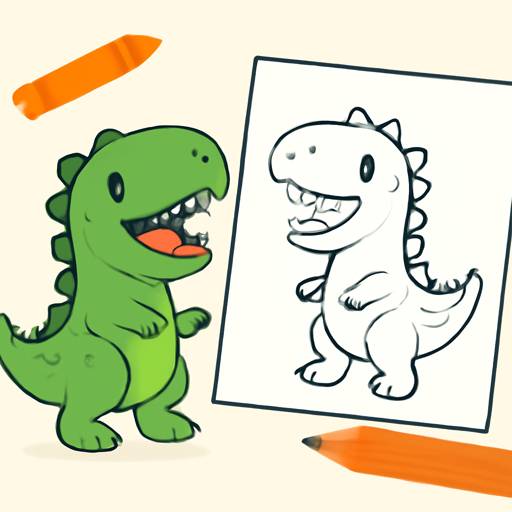
Few themes capture the imagination quite like dinosaurs. From towering tyrannosaurs to graceful long-necked sauropods, prehistoric creatures unlock a world of wonder, questions, and creativity for kids and adults alike. That’s why free dinosaur coloring pages remain a timeless favorite—easy to print, instantly engaging, and endlessly customizable. Whether you’re a parent seeking a screen-free afternoon, a teacher building a science unit, or a therapy professional designing calming, tactile activities, dinosaur coloring sheets offer a perfect blend of learning and fun. Today’s options go far beyond basic outlines, too: you can find realistic paleo-inspired scenes, cartoon-style hatchlings, action-packed habitats, and even personalized illustrations that feature your child’s name or a beloved pet in a dino world. With high-quality, printable line art ready in seconds, it’s never been simpler to spark creative confidence, support fine motor skills, and inspire a lifelong love of natural history—one crayon stroke at a time.
Just as exciting, modern tools make it possible to tailor every page to your needs. Want a Stegosaurus in a rainforest? A Velociraptor on a volcano ridge? Or a friendly Brontosaurus celebrating a birthday? With a few quick choices or a short prompt, you can generate custom dinosaur coloring pages that align perfectly with your learning goals, party theme, or child’s favorite dino. The result is a personalized, printable activity that feels inviting and fresh every time you open the crayon box.
Why Free Dinosaur Coloring Pages Are More Than Just Fun
Coloring is more than a pastime; it’s a practical learning tool. With free dinosaur coloring pages, students naturally connect art with STEM concepts. While coloring a Triceratops, they’re exploring shape recognition and comparing body structures—horns versus crests, armor plates versus feathers—without feeling like it’s “work.” Pair a Tyrannosaurus outline with a short reading passage, and you’ve instantly created a cross-curricular activity that builds vocabulary, reading fluency, and content knowledge about ecosystems, eras, and extinction theories.
Beyond academics, coloring supports developmental growth. Grasping crayons or markers strengthens finger and hand muscles that play a key role in handwriting. Choosing hues and staying in the lines refine hand-eye coordination and spatial awareness. For younger learners, even simple tasks—like circling dinosaur eggs or tracing footprints—provide milestones for fine motor skill development. For older kids and adults, complex line art with detailed scales, fern fronds, and rocky terrain develops patience and attention to detail, enhancing executive function skills like focus and self-regulation.
There’s also a powerful emotional component. Coloring has been shown to reduce anxiety, provide a calming routine, and create a sense of agency. A child who feels overwhelmed by text-heavy worksheets may thrive with a coloring-first approach to learning about the Cretaceous period. In therapy or counseling settings, dinosaur pages can be conversation starters: “What kind of dinosaur would you be today?” “How would this Triceratops protect its herd?” These prompts allow kids to project feelings safely while staying engaged with a non-threatening, playful task.
Practicality matters too. Because pages are instantly printable, educators and parents can react in real time to shifting interests. If a student becomes fascinated with pterosaurs after a museum visit, it takes seconds to print a targeted set of printable dinosaur coloring sheets. If a rainy afternoon calls for an at-home art binge, a curated batch of pages—ranging from easy outlines for little hands to intricate habitats for older artists—keeps everyone focused and entertained. With no special materials required beyond paper and coloring tools, you can offer an enriching, screen-free activity wherever you are: at home, in class, in a library makerspace, or during after-school clubs.
From T. rex to Triceratops: Themes, Skill Levels, and Creative Extensions
The magic of dinosaurs lies in their variety. Thoughtful themes help you scaffold difficulty and spark specific interests. For preschool and kindergarten, choose friendly, big shapes: a smiling Ankylosaurus or a Brontosaurus grazing by a lake. Large outlines make room for broad strokes, dab painting with sponges, or finger painting for sensory play. Add dotted-line paths for tracing, or include simple counting (“Color 5 Dino Eggs”) to weave in early math.
For early elementary, lean into habitat scenes—ferns, cycads, volcanoes, rivers—so learners contextualize dinosaurs as part of an ecosystem. This is the perfect moment to introduce vocabulary like herbivore, carnivore, omnivore, and to talk about how geologic time is divided. As they color, ask questions: “What colors might camouflage a forest-dwelling dinosaur?” “How could feathers help regulate temperature?” These prompts tie art to science, reinforcing observation and inference skills.
Upper elementary and middle school artists will enjoy higher-detail line work and “action” compositions—Velociraptors sprinting, a Triceratops herd navigating a floodplain, a T. rex silhouetted against an ash-filled sky. Integrate research: have students pick a dinosaur, color it, and then write three facts that match their color choices. Encourage technique, too: layering colored pencils for shadows under plates and frills, using complementary colors to make subjects pop, and adding doodled texture on rocks or bark to enrich the scene.
Creative extensions carry the learning even further. Try “color-and-create” story pages: leave a panel for kids to draw their own dinosaur discovery or invent a new species with labeled features. Build a class timeline by printing one dinosaur per era and arranging colored pages along a wall. Host a dino gallery walk where students explain how color choices reflect climate, diet, or habitat. For families, compile completed pages into a homemade coloring book, or frame favorites for a child’s bedroom. These simple activities show that free dinosaur coloring pages can evolve from one-off sheets into an integrated art-and-science journey.
Make Them Your Own: Personalized Pages for Classrooms, Parties, Libraries, and Therapy
Personalization turns good coloring pages into unforgettable ones. Maybe your classroom adopted a “Dino Discovery” theme and you want each student’s name hidden in a fossil bed. Perhaps your child dreams of a Stegosaurus wearing a birthday crown, or you’d like a page featuring the family dog exploring a Jurassic meadow. Modern tools powered by AI can transform short prompts or photos into crisp, black-and-white line art tailored to your exact vision—no drawing skills needed.
Consider real-world scenarios. A second-grade teacher creates a weeklong dinosaur unit: Monday’s pages highlight herbivores, Tuesday focuses on carnivores, Wednesday explores habitats, Thursday adds feathered species, and Friday becomes a design-your-own-dino celebration. Each printable is adjusted for reading level and motor skill: bold outlines for beginners, intricate scales and fern patterns for advanced artists. At a community library, a weekend “Prehistoric Party” includes a coloring station with dinosaur bookmarks, trading cards to color and swap, and a collaborative mural featuring a sauropod stretching across a six-foot paper roll. In a pediatric therapy setting, a therapist selects soothing, low-detail pages to promote calm breathing and slow, rhythmic coloring, then gradually introduces more complex scenes as focus and fine motor control improve.
Event planners and parents benefit, too. For birthday parties, print a custom set where guests color different dinosaurs that match party favors or table names—T. rex Table, Pteranodon Pizza Station, Triceratops Treats. Add a scavenger-hunt twist: hide tiny fossils or tracks on each page for kids to find and color. For rainy-day family fun, create a small “field guide” coloring booklet: include a page per dinosaur with a blank box for kids to write fun facts. For homeschool lessons, pair each printable with a quick experiment—build a paper volcano, test “fossil” imprints in clay, or categorize craft feathers by length to discuss insulation and display behaviors.
When you’re ready to explore, start with a curated collection of free dinosaur coloring pages and then layer on personalization based on interests, age, and skill level. Because these pages are fast to generate and simple to print, you can iterate on the fly—swapping a desert scene for a coastal one, adding a comet-streaked sky, or turning a favorite stuffed dinosaur into a line-art cameo. Over time, you’ll build a unique library of free dinosaur coloring pages that grows with your learners, enriches lessons, elevates parties, and brings calm focus to busy days—all while keeping creativity at the center.

Helsinki astrophysicist mentoring students in Kigali. Elias breaks down gravitational-wave news, Rwandan coffee economics, and Pomodoro-method variations. He 3-D-prints telescope parts from recycled PLA and bikes volcanic slopes for cardio.